Traveling soon? You're in the right place!

Bolivia Took My Breath Away—Literally: Altitude, Assault, and Amazing Views
Bolivia took my breath away—literally. From severe altitude sickness and a stolen Amber Anywhere hat to Lake Titicaca, Moon Valley, cable cars, and unforgettable local encounters, this trip was equal parts beautiful, bizarre, and intense.
7/24/202611 min read
The 3 A's of my trip to Bolivia:
Altitude Sickness, Assault, and Amazing Views
Bolivia gave me breathtaking landscapes, fascinating traditions, kind people, a canceled dream tour, severe altitude sickness—and my first experience being assaulted and robbed while traveling.
So yes, it was a mixed bag.
My original plan centered on visiting Bolivia’s famous Uyuni Salt Flats. Instead, I found myself wandering through clay formations that resembled another planet, learning unsettling stories about an infamous prison, sharing a papaya with a local tour guide, watching an excellent Bolivian band, climbing donkey-dung-covered Inca stairs, and watching the sun rise over Lake Titicaca.
Oh, and somewhere in La Paz, a stranger may now be providing free advertising for AmberAnywhere.com.
Let me explain.
The $250 Yellow Fever Vaccine No One Asked to See
Preparing for Bolivia began with confusion over the yellow fever vaccine.
Current guidance is not exactly simple. The U.S. State Department says Bolivia requires an International Certificate of Yellow Fever Vaccination, particularly for travelers visiting lower-elevation regions east of the Andes. However, the CDC does not recommend the vaccine when travel is limited to high-altitude cities such as La Paz and Sucre. Requirements and health recommendations can also depend on your complete itinerary, including where you traveled before entering Bolivia.
Naturally, I did not want to be denied entry because I was missing a vaccine certificate. I got the vaccine.
Because the American healthcare system is so wonderful (hoping you detect my sarcasm), Americans may have to pay hundreds of dollars for a vaccine that is available free of charge in many countries. My insurance company initially said it would cover mine and then reversed that decision.
I was out $250.
And when I arrived in Bolivia?
No one asked to see my yellow fever vaccine certificate.
That does not mean you should skip the vaccine or ignore the rules. Border enforcement can be inconsistent, and your needs will depend on your destinations. Check the latest official requirements and speak with a medical professional before your trip.
For those who need travel vaccines or medication, I recommend checking Costco if you have a membership. My vaccine was much cheaper there, and the service was excellent. The travel medicine consultation provided me with prescriptions and recommendations for motion sickness, altitude sickness, and traveler’s diarrhea—diarrhea cha-cha-cha🎶—which was, thankfully, one of the few medicines I had no use for. Travel medicine services and yellow fever vaccines are available at Costco pharmacies, although availability may vary by location.
At the time, I had no idea how important those altitude medications were about to become.
The Uyuni Salt Flats Tour That Wasn’t
I was incredibly excited about seeing the Uyuni Salt Flats, one of Bolivia’s most famous landscapes.
Then, only days before the trip, Joker Expeditions canceled my tour, citing “civil unrest.”
There had been protests related to fuel prices, and traffic was apparently being blocked in some areas. Bolivia is known for demonstrations and roadblocks that can develop quickly and interfere with transportation, so disruption was certainly possible.
Still, the cancellation came at the last minute. When I arrived in La Paz, everything appeared fine.
I cannot know what conditions the company was monitoring behind the scenes, but from a customer’s perspective, having a major tour canceled only days before departure was extremely disappointing.
Not cool, Joker Expeditions.
The cancellation may ultimately have worked in my favor. The tour would have required two overnight bus journeys of approximately eight hours each. After what happened to me in La Paz, spending 16 hours on overnight buses would probably not have been ideal.
I still want to see the salt flats. When I return, I will probably fly into Uyuni—or perhaps visit from Sucre—rather than endure two long overnight bus rides.
My Last-Minute La Paz Pivot
With Uyuni suddenly removed from my schedule, I needed a new plan.
I booked a free walking and cable-car tour of La Paz for the day after I arrived. I also reserved a guided tour of the Valley of the Moon for the following day. I paid only about $20 for the three-hour Moon Valley tour.
A solid recovery plan—or so I thought.
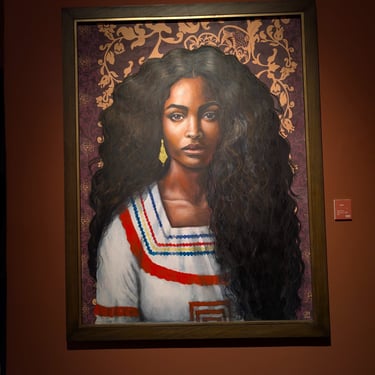
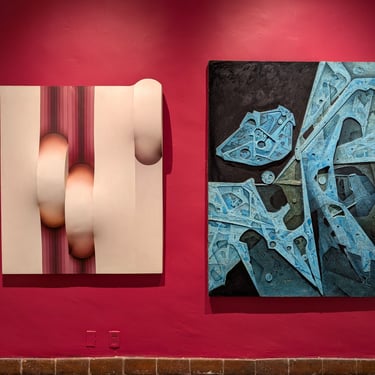
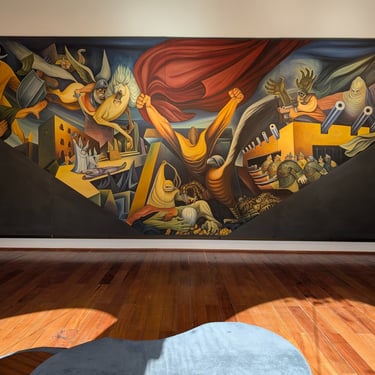
On the morning of the walking tour, I woke up early and decided to visit an art museum before stopping at a grocery store for drinks and snacks.
Almost immediately, I could tell that something was wrong.
I was out of breath after walking for only five minutes.
I had just spent five days in Cusco, which sits at approximately 3,400 meters above sea level. There, I sometimes needed to stop after walking for ten minutes, particularly on an incline. La Paz is higher—approximately 3,650 meters—but I did not think the difference would be enough to cause a serious problem.
My body disagreed.
A Walking Tour My Body Did Not Want to Take
Finding the walking-tour guide was harder than expected because he was not wearing or holding anything identifying him as a guide.
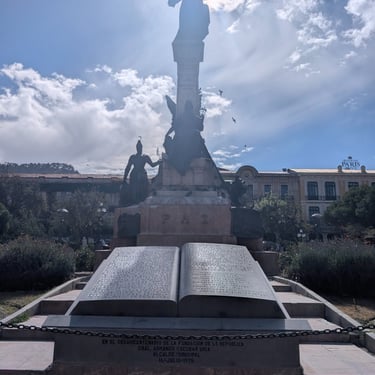
Once I found him, our small group began walking uphill toward the main plaza—the same plaza I had just come from.
Why we did not simply meet there, I do not know.
By the time we arrived, I was already hurting.
The only other participants were a friendly young Irish couple who appeared completely unaffected by the altitude. Meanwhile, I could feel my body struggling to keep up.
Our guide discussed Bolivia’s history, including some of its more infamous presidents. At one point, a local man appeared unhappy with what the guide was saying. From my perspective, the presentation had been factual and balanced—and I tend to notice quickly when someone is being biased.
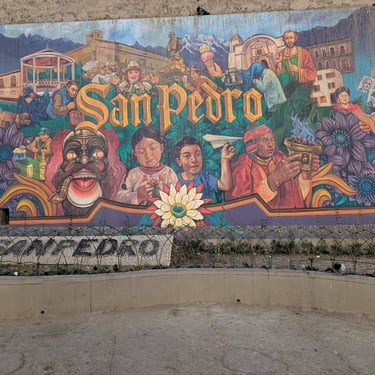
Then we continued toward San Pedro Prison.
I had to stop several times within a single block to catch my breath. Despite drinking water all morning, my lips felt extremely dry.
I was relieved when we finally reached the prison because I could sit on a bench.
Unfortunately, that bench was directly in the sun.
Fascinating Stories Outside San Pedro Prison
San Pedro is unlike any prison I had ever heard about.
According to our guide, prisoners essentially operate their own internal community. He told us that some prisoners live with their families, that there is a sauna inside, and that drugs are bought, sold, and even manufactured within the prison.
He also claimed that prisoners could sometimes pay guards roughly $40 to leave for the day.
Whether every detail remains accurate today, I cannot independently confirm. But I was riveted.
Our guide said the prison was originally designed for around 600 people but now held approximately 4,000. This, I completely believe. Visitors could apparently pay to enter, although he strongly advised against doing so.
I wanted to keep listening.
My body had other plans.
As much as I did not want to stand, I desperately needed shade. I got up from the bench, felt my stomach churn, and vomited directly into a grassy area.
Strangely, I felt better afterward.
I cleaned myself up and—because the prison stories were so fascinating—stayed for a few more minutes.
Fortunately, my hotel was only about a five-minute walk away. I tipped the guide and abandoned the rest of the tour, including the cable-car ride to El Alto, which sits even higher than central La Paz.
The Altitude Lesson I Should Have Learned Sooner
I returned to the El Rey Palace Hotel and remained in my room for the rest of the day.
The hotel was a decent, affordable option in a central location, and several of my tours offered pickup nearby. Under better circumstances, I would have appreciated its convenience much more.
Instead, I felt awful.
My head hurt. I had chills. My face felt hot, so I may have had a fever. I am also fairly sure my lips developed a bluish tint, which can indicate that the body is not receiving enough oxygen.
Altitude sickness usually begins within hours of reaching a high elevation, but my experience was less straightforward. I had already spent several days in Cusco and had been in La Paz for approximately 24 hours before my symptoms became severe.
The biggest problem was that I did not listen to my body.
I knew I was struggling before the tour began. I should have told the guide that I was not walking uphill and would meet the group at San Pedro Prison.
Instead, I tried to keep up.
There is no prize for pushing yourself until you become seriously ill. Severe symptoms require medical attention—not just stubbornness and a hotel bed.
Fortunately, the travel medicine consultation at Costco had provided both preventive altitude medication and medication to use if I became sick. I took the medication as directed and felt considerably better the next morning.
Please consult your own healthcare professional before traveling.
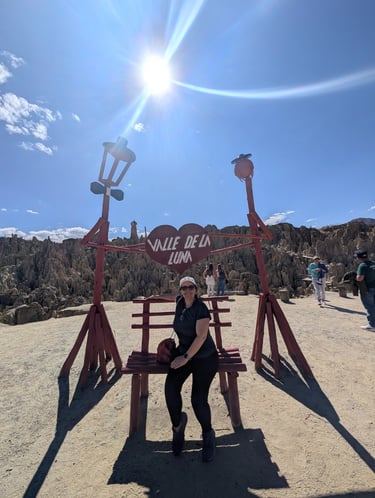
The Valley of the Moon
The next morning, I felt well enough to join my tour of the Valley of the Moon.
I am very glad I did.
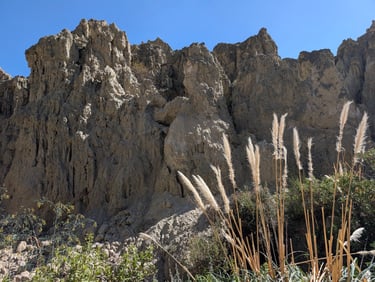
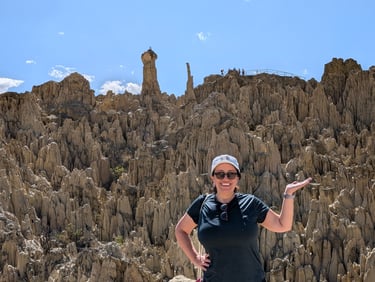
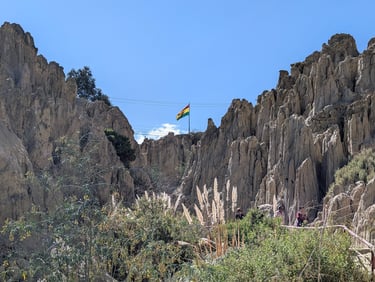
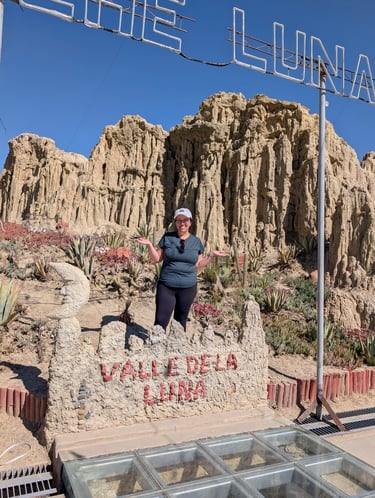
The landscape looked like an enormous field of stalagmites, but the formations are not cave deposits. They are primarily clay and sandstone that have been carved into narrow ridges and dramatic spires by erosion.
It felt like walking through a natural sculpture garden on another planet.
The views were fantastic, and the relatively short tour was ideal after the previous day’s disaster. I also hit it off with our guide. Later that day, we met again and split a papaya while talking in Spanish.
It was one of those spontaneous travel experiences that makes a destination feel more personal.
The Witches’ Market—and My Strange Interests
My guide also showed me items connected to traditional Andean spiritual practices.
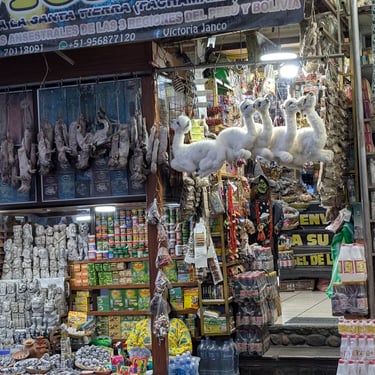
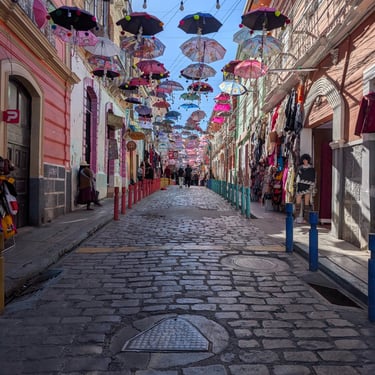
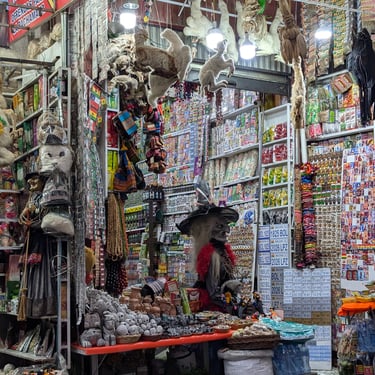
At La Paz’s famous Witches’ Market, you can see dried llama fetuses and other objects used in offerings to Pachamama, or Mother Earth. These offerings can be prepared as part of ceremonies intended to express gratitude or request protection, health, prosperity, and good fortune.
I was fascinated and took several pictures.
Yes, I am a vegetarian.
Yes, I recognize that being intensely interested in animal fetuses may appear inconsistent with that.
What can I say? I'm fascinated by the weird!
The Moment Someone Stole My Amber Anywhere Hat
As my guide and I continued walking and chatting in Spanish, I suddenly felt something strike the back of my head.
Initially, I thought an object had fallen from a window.
It had not.
A man had hit me on the back of the head, grabbed my Amber Anywhere hat, and sprinted away.
To be clear, this was not a Louis Vuitton hat.
It was not a Yankees hat.
It was an Amber Anywhere hat.
I have traveled throughout the world and lived in New York City for years. Before this incident, I had never been assaulted and robbed.
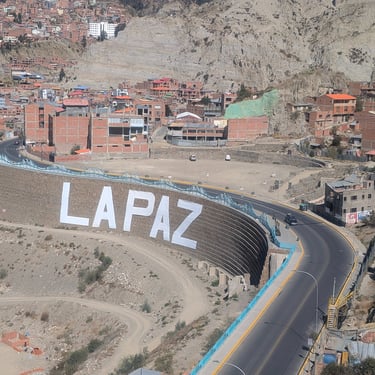
Yet there I was, walking with a local guide in broad daylight, in a touristy part of La Paz, when a stranger decided that my promotional hat was worth attacking me for.
La Paz had not previously made me feel unsafe. I have visited cities where my instincts immediately told me to be cautious—Johannesburg, South Africa, comes to mind—but La Paz had not given me those same uneasy feelings.
That made the attack especially shocking.
I decided not to report it. The hat was not valuable, the man was long gone, and I was grateful the situation had not become worse.
I still do not understand why someone would hit a stranger for such a ridiculous reason.
Perhaps he is now walking around La Paz and providing free advertising for AmberAnywhere.com.
I suppose that is one way to turn my lemons into lemonade! 🍋🍋🍋
Music Helped Us Shake It Off
My guide and I tried not to let one idiot ruin the rest of the afternoon.
Near my hotel, we stopped to watch a wonderful folkloric group called Ñawi Bolivia.
The women sang at the front while the men played instruments behind them. They were adorable, energetic, and genuinely talented.
The music was excellent and provided exactly the emotional reset I needed after the theft.
Check out my video below—you will understand why we stopped to watch them play a few songs.

Finally Reaching Lake Titicaca
The following morning, I woke up early for my trip to Lake Titicaca—one of those places you may remember first hearing about in Saturday-morning cartoons, assuming you are of a certain age.
Getting to Isla del Sol required approximately three hours by bus, a 15-minute boat ride, and then another boat trip lasting nearly two hours.
Once we arrived, our guide offered to lead everyone up the island.
And I do mean up.
Isla del Sol is essentially a mountain rising from the lake. Given my recent experience in La Paz, I finally made a wise decision and skipped the group climb.
Instead, I headed to my hotel.
But even getting there was no easy feat.
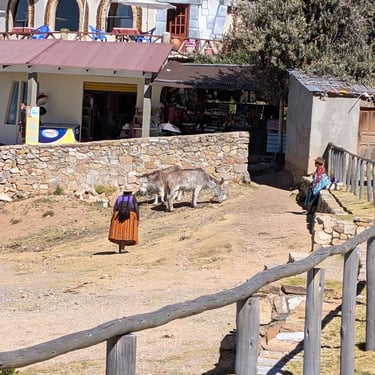
Google Maps was nearly useless because there are no conventional roads—just stairs. Lots and lots of stairs.
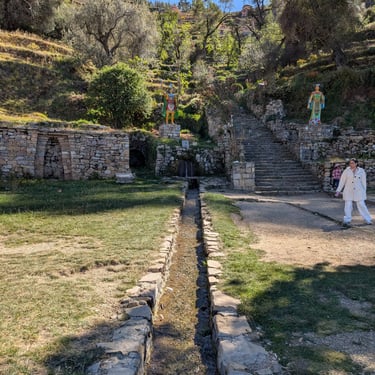
And these were not perfectly level modern staircases with smooth railings. They were Inca-style stone stairs: rocky, slippery, crumbly, uneven, and occasionally decorated with donkey dung.
I had to ask for directions in Spanish several times before finding Jacha Inti.
A Room With a View—and More Stairs
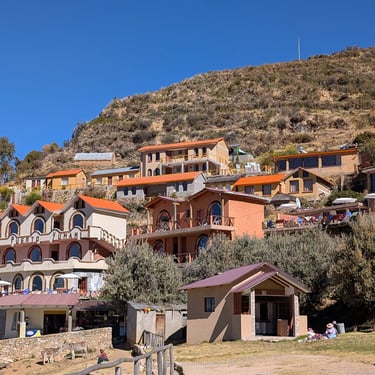
I highly recommend Jacha Inti because the rooms provide wonderful views of Lake Titicaca.
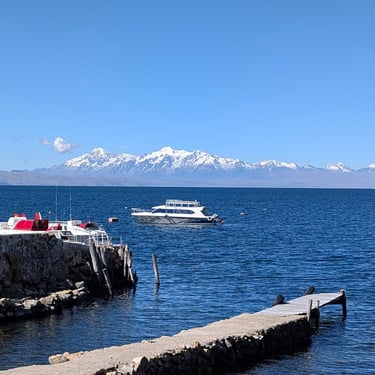
The island itself is spectacular. The deep-blue lake stretches toward distant mountains, and the quiet feels completely removed from the activity of La Paz.
However, fill your stomach before sunset.
Walking those stairs after dark is not easy.
I learned this after going to a nearby restaurant that I am not recommending, so I will leave it unnamed. A walk that might have taken ten minutes under normal circumstances required approximately 40 minutes because it was almost entirely stairs and I kept getting winded.
On the way back, I slipped and landed on my rear end.
Thankfully, the only serious injury was to my dignity...and no one was around to see it.
I had finally learned not to push myself, so I spent most of my time resting.
Sunrise Over Isla del Sol
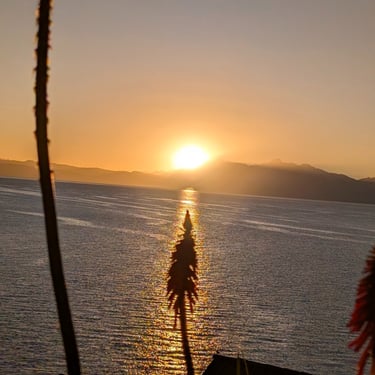
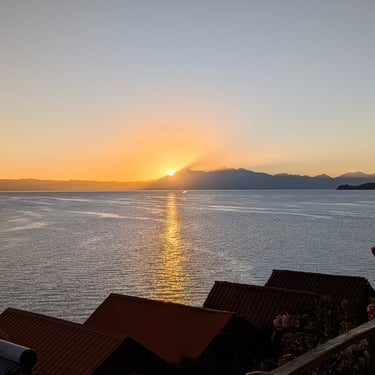
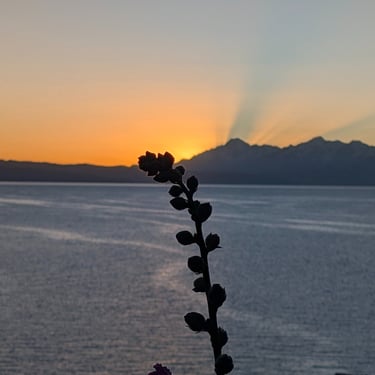
I woke up early enough to watch the sunrise over Lake Titicaca.
It was beautiful.
The temperature was approximately 45 to 50 degrees, so I repeatedly stepped outside to take pictures and then retreated into my room to warm up.
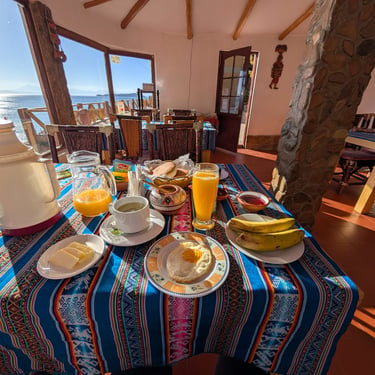
I spent the rest of the morning relaxing and enjoyed an excellent breakfast at the hotel. I did have to pay in cash, so I was very glad I had visited an ATM before traveling to the island.
Although checkout was at noon, the staff allowed me to remain in the restaurant until 2 p.m.
That quiet time was exactly what I needed.
After two more boat rides and a bus journey of approximately two hours, I returned to the El Rey Palace Hotel in La Paz.
Seeing La Paz From Above
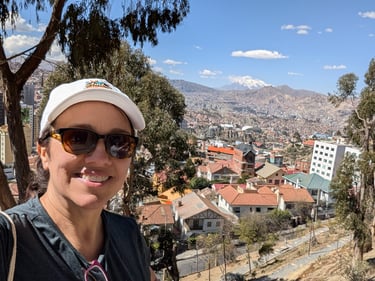
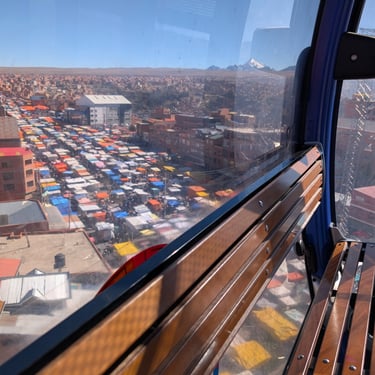
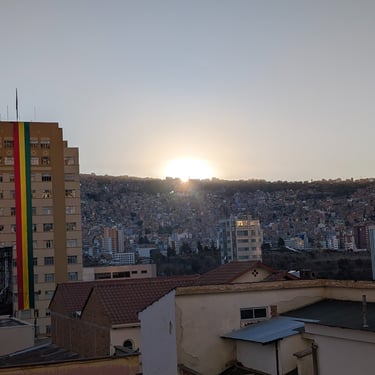
On my final morning, I finally rode the cable cars I had missed during the walking tour.
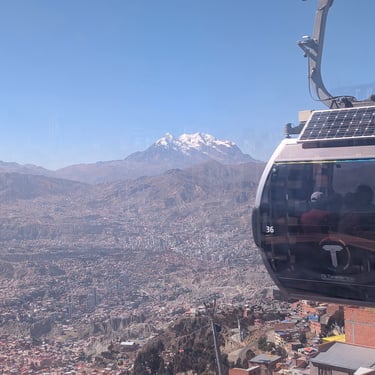
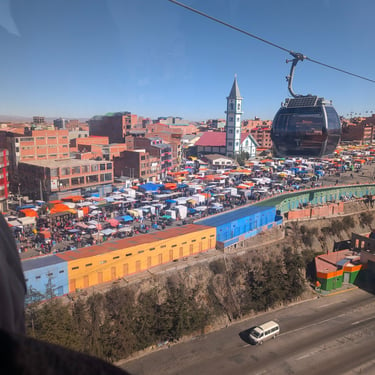
Mi Teleférico is not merely a tourist attraction. It is a major part of the public transportation system connecting La Paz and El Alto—and it is considered the world’s largest urban cable-car network.
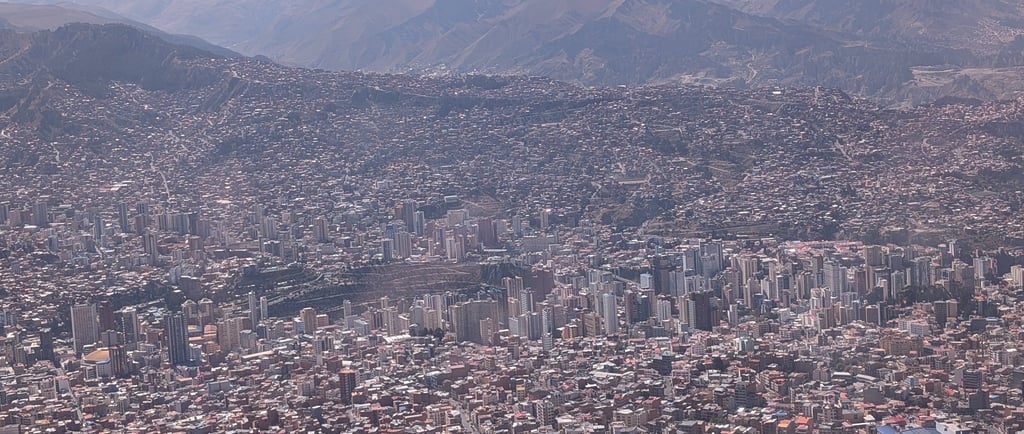
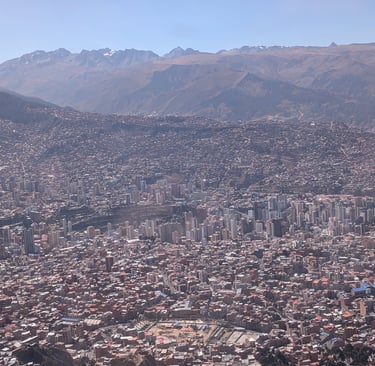
For the equivalent of only a few cents per ride, I traveled above the city and enjoyed extraordinary views of La Paz’s dense neighborhoods, dramatic slopes, and surrounding mountains.
It was one of the least expensive—and most visually impressive—activities of the entire trip.
Even after everything that had happened, I was glad I had enough time and energy to experience it.
Do not visit La Paz without riding the cable cars.
Bolivia:
A Complicated Recommendation
My trip to Bolivia was undeniably a mixed bag.
I missed the Uyuni Salt Flats after my tour was canceled at the last minute. I experienced frightening altitude symptoms. I was hit on the head and robbed of a hat so inexpensive and specific that stealing it seemed completely ridiculous.
But I also saw the astonishing Valley of the Moon. I learned about Bolivian history and Andean spiritual traditions. I listened to wonderful live music. I watched the sun rise over Lake Titicaca. I met kind guides, practiced my Spanish, split a papaya with a new friend, and rode above La Paz for almost no money.
Other than the one man who attacked me, the Bolivian people I encountered were kind, friendly, and helpful.
I do recommend visiting Bolivia—but prepare carefully.
Talk with a travel medicine professional. Understand the altitude. Carry any recommended medication. Build time into your itinerary to acclimatize. Do not assume that because you handled one high-altitude destination, you will automatically handle the next one.
Most importantly, listen to your body.
And, as my eighth-grade teacher used to say, be aware of your surroundings.
Even when the surroundings initially feel rather safe.
Especially when you are wearing an extremely desirable Amber Anywhere hat.
Get the Hat—Legally
Apparently, the Amber Anywhere hat is so irresistible that some people are willing to commit a crime to get one.
Fortunately, you do not need to hit anyone over the head or sprint through the streets of La Paz. You can purchase your own Amber Anywhere hat legally at AmberAnywhere.com/store—and get 25% off with the promo code WHATASTEAL (expires 8/31/2026).
It is a much better deal than robbery, and your purchase helps support my future travels, unexpected adventures, and my questionable decisions at high altitudes.